Chicken Rush 2 at Elon: The Crash Game Where You Pick the Exit
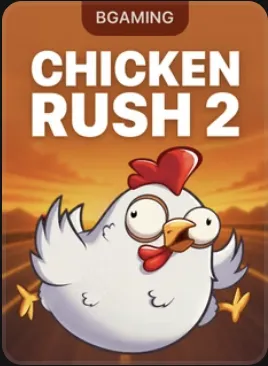
A startled white chicken sprints down an empty road under an orange sky. Chicken Rush 2 is the one confirmed crash game among Elon's featured titles: a round builds a multiplier, it ends at a random point, and your only decision is when to step out. That single decision is easy to make badly, which is what this page is about.
Find Chicken Rush 2 at ElonStudio
BGaming
Format
Crash game
RTP
Not recorded — see rules
Your one decision
When to cash out
What is on file and what is not
| Item | Status | Source or place to check |
|---|---|---|
| Studio | BGaming — confirmed | Studio's game page |
| Format | Crash — confirmed | Studio's game page |
| RTP | Not recorded | Rules screen of your copy |
| Maximum multiplier, auto cash-out, disconnection rule | Not recorded | Rules screen of your copy |
How a crash round settles
Every crash game rests on the same mechanism. You place a stake, the round starts, and a multiplier attached to that stake grows until the round ends at a point decided by the random number generator. Cash out before the end and you receive the stake multiplied by the value at that moment; stay in past the end and the stake is gone. Some games run the climb on a timer, others advance one step each time you press — a chicken crossing one more lane, for instance. Which version this is, how high the multiplier can go and how an interrupted round is settled are all written in the rules screen. Read it once before the first real round.
Why no exit target beats the game
Because the end point is random, nothing you see in earlier rounds predicts the next one — not a run of early crashes, not a "pattern" sold in a chat group, not a bot. What you do control is the shape of your session. A low target wins often and pays little; a high target loses often and occasionally pays a lot. Over many rounds both lose at roughly the rate the RTP implies; the difference is only how rough the ride feels.
Two habits cost crash players most. The first is raising the stake after a loss to win it back. The second is pushing the target higher after a near miss. Both feel rational in the moment and neither changes the odds. If the game offers an auto cash-out, set it before the round starts so that nerves do not set it for you.
Sizing a fast game
Rounds take seconds, so a budget drains faster than on a slot at the same stake. As an illustration, with a session budget of 150 units, keeping each stake at one or two percent means 1.5 to 3 units per round. Decide in advance how many rounds you will play and the loss at which you stop. Write both down if that helps — a crash game is designed to make "one more round" feel natural.
Checking you have the genuine game
Popular crash titles are imitated on unlicensed sites, sometimes under the same name. Open the game only from the operator's own domain, confirm that the loading screen names BGaming, and check that the rules screen is complete and consistent. A copy that hides its rules, or a site that offers "predictor" tools for the game, is a reason to leave. More warning signs are on the mirror and fake-site page.
Compared with the rest of the featured eight
Chicken Rush 2 is the only confirmed crash game in the set. The reel games — Reel Of Ra or Tiger Jungle, for example — settle each spin without any input from you, while Monopoly Roll Em is presented by a host on camera. If deciding mid-round appeals to you, this is the format; if that pressure is unpleasant, a reel game with a clear paytable will feel calmer. Pump It may look similar at first glance, but its format is not confirmed — read its rules separately.
Chicken Rush 2 questions
Which studio makes Chicken Rush 2?
What is the RTP of Chicken Rush 2?
What happens to my bet if the connection drops mid-round?
Crash games are fast and easy to chase. Play only if you are 18 or over and gambling is permitted where you live; limits and free support are on the responsible gambling page.